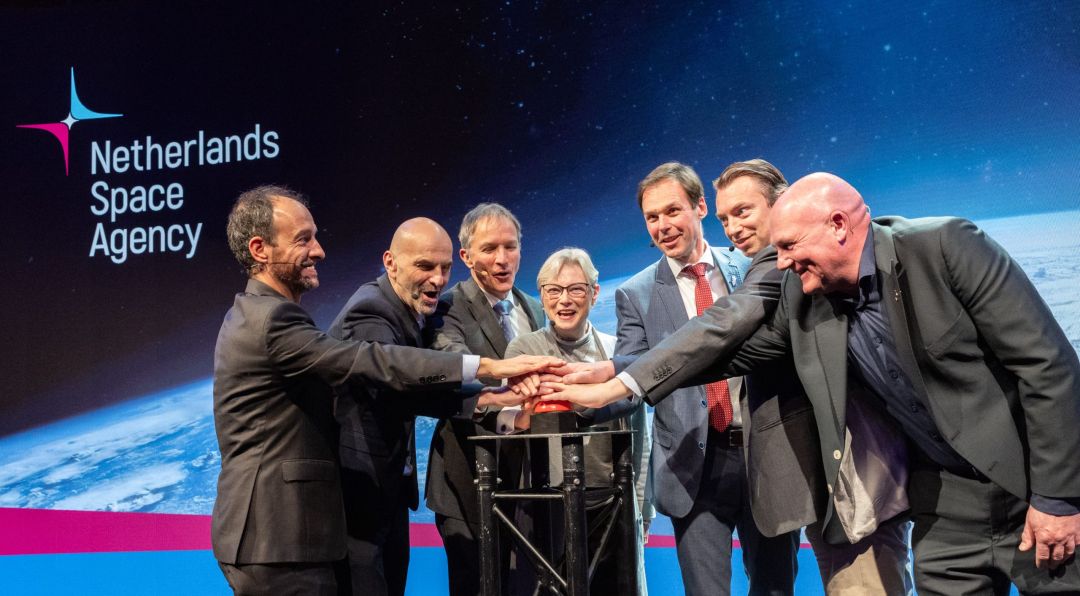
Bijl PR led the agency’s strategic positioning, working closely with the NLSA team, partner organisations and key stakeholders throughout the process. To bring the new brand to life, we collaborated with creative agency Campagne and digital agency Harborn.
Together, our ambition was to create a strong, recognisable and future-proof corporate identity that reflects the organisation’s role within the Dutch government while strengthening its position in the international space sector.
A strategy built on insight
The project began with an extensive discovery phase, exploring how the organisation was perceived, where its strengths lay and what role it wanted to play in the future.
Attention was given to the relationship between the societal value of space, the organisation’s strategic ambitions and stakeholder expectations. These insights became the foundation for every stage that followed.
The project followed a carefully phased approach, with each stage building on the decisions and learnings of the previous one.
The journey included:
- an organisational and stakeholder analysis;
- development of the brand strategy;
- creation of the visual identity;
- development of communication assets;
- the launch of the new website;
- an internal roll-out across the organisation;
- the external launch for stakeholders and the wider public;
- evaluation and long-term integration of the new brand across all communications.
Each phase concluded with careful governance and stakeholder approval, ensuring every decision was strategically sound and widely supported within the organisation before moving forward.
Creating a shared vision
Building internal and external support was central throughout the project. By actively involving colleagues, senior leadership and external stakeholders at every stage, we not only sharpened the agency’s positioning but also created a shared understanding of where the organisation wanted to go.
Through a series of collaborative workshops, different strategic directions were explored, refined and tested. Once the positioning had been agreed, it was translated into every aspect of the organisation’s identity, including:
- the new name;
- the brand narrative;
- the visual identity;
- communication materials;
- the new website.
As a result, the new identity became much more than a visual refresh. It evolved into an authentic and credible expression of the organisation’s purpose, ambitions and strategic role.
That shared ownership produced a brand story that is both strategically robust and widely recognised and embraced across the organisation.